
 5.030 Google reviews10-year guarantee, up to 20 years depending on the job
Roof tiling in Croydon, from 1930s semis to Edwardian villas
Who do you call for roof tiling in Croydon when the concrete tiles on your semi have gone porous? Apex come out, survey the roof and give you a free, no-obligation quote in writing.
Get a tiling quote
Pick the job. It takes about 30 seconds.
Or call free on 0800 404 6688. Pay on completion.
5.0 on Google30 reviews, all 5 stars
 Expert Roofer VerifiedEvery check passed, see our profile
Signs your tiled roof is wearing out
Tiles give plenty of warning if you know where to look.
Tiles gone dull and porous
Concrete tiles lose their surface coating over the years. Once the sand shows through, they soak up rain, grow moss and get heavier.
Cracked or snapped tiles
Frost gets into porous tiles and splits them. A cracked tile opens a gap straight onto the membrane below, or onto bare battens on older roofs.
Moss lifting the tile tails
Moss grows thick between interlocking tiles, holds water and lifts the lower edge of each tile, so wind-driven rain gets underneath.
Mortar falling from the ridge
Lumps of mortar on the path mean the ridge or hip bedding is breaking up. The tiles above it will follow in the next gale.
Clay tiles sliding down
Old clay plain tiles hang on small nibs over the battens. When the nibs snap or the battens rot, tiles slide down and leave open gaps.
Tiling done properly, batten by batten
Patrick gets on the roof and into the loft before he prices anything. He photographs the tiles, the state of the battens and whatever is left of the old felt, and he shows you. If the roof has a few broken tiles, you get a repair price. If the tiles are porous across both slopes and the battens are soft, a re-tile is the answer, and you will have seen why.
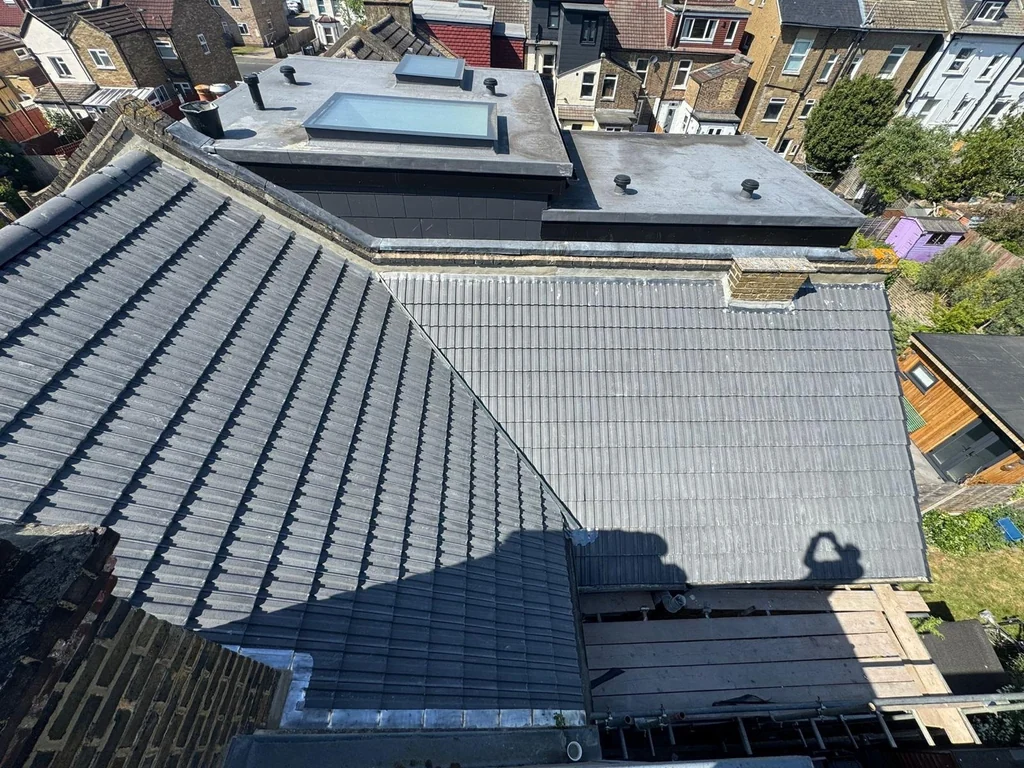
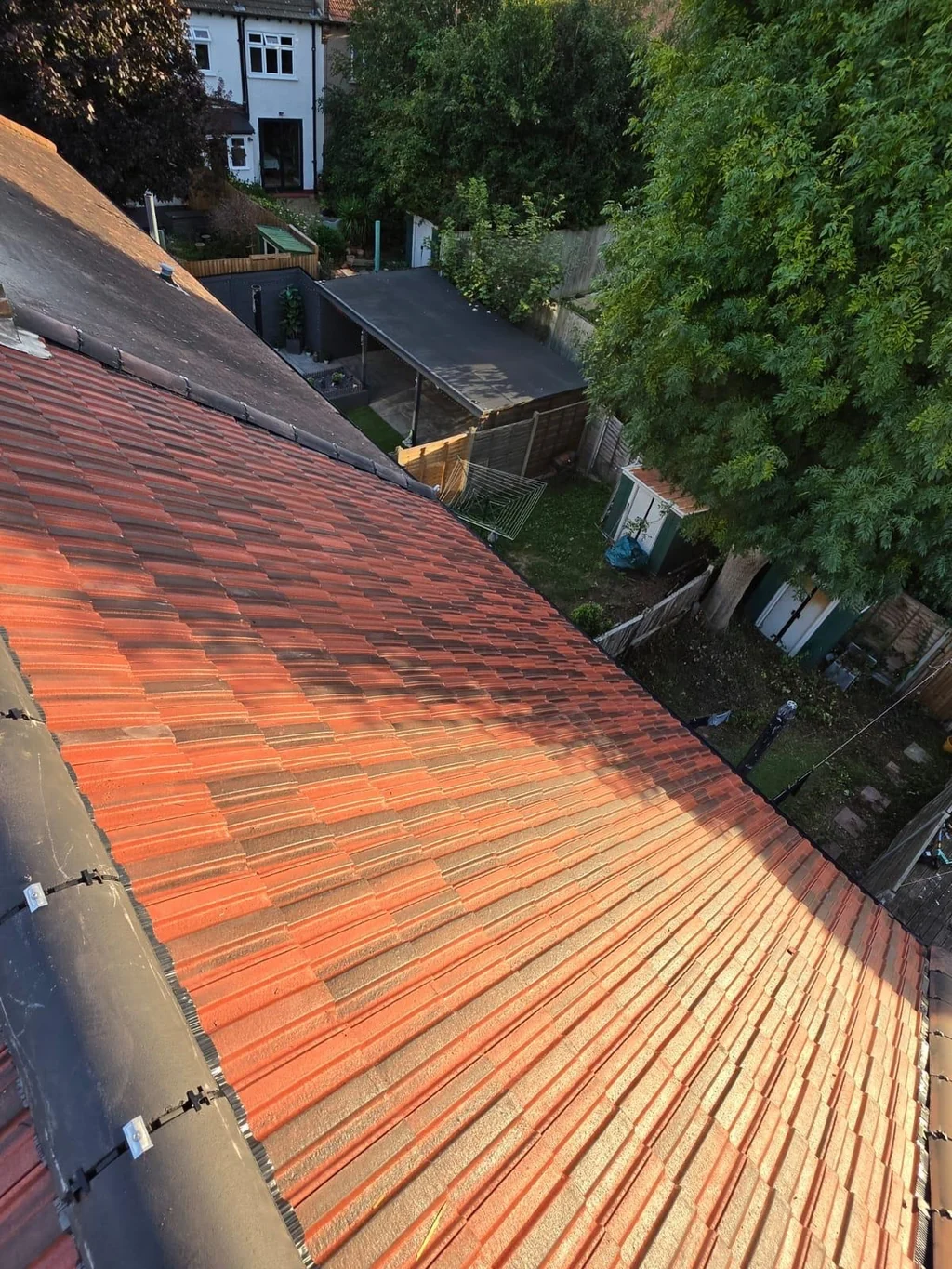
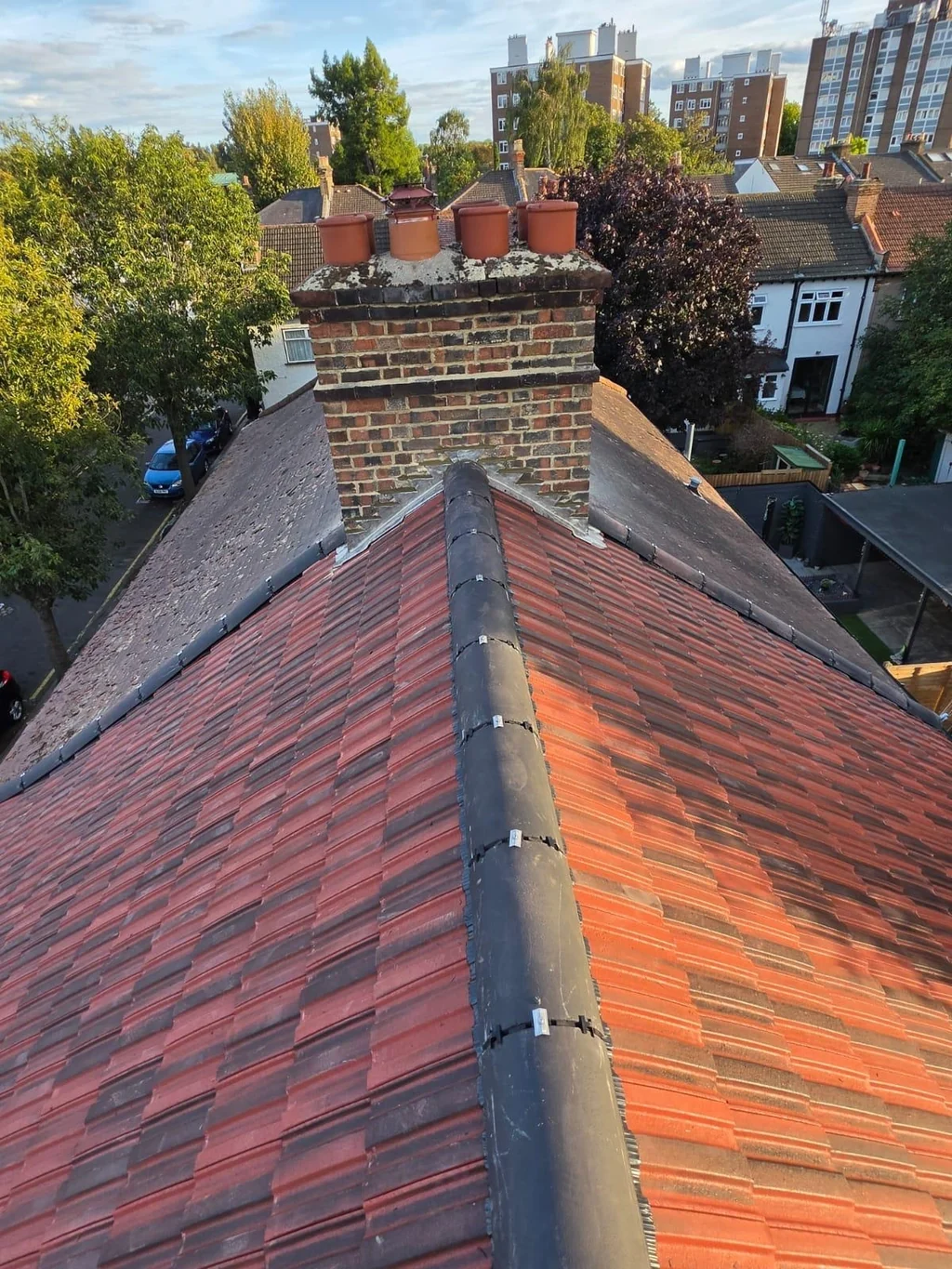
On a re-tile, the old concrete or clay tiles come off along with the battens and felt. A breathable membrane goes on, then new treated battens set to the right gauge for the tile. Interlocking tiles are nailed and clipped to BS 5534, which matters in the gales that hit south London. Clay plain tiles are double-lapped and nailed. The ridge and hips are finished in dry-fix, and every broken tile leaves with the team.
- Concrete interlocking or clay plain tiles
- New battens set to the right gauge
- Breathable membrane under every tile
- Tiles nailed and clipped to BS 5534
- Dry-fix ridge and hips
Tiled roofs across Croydon's inter-war estates
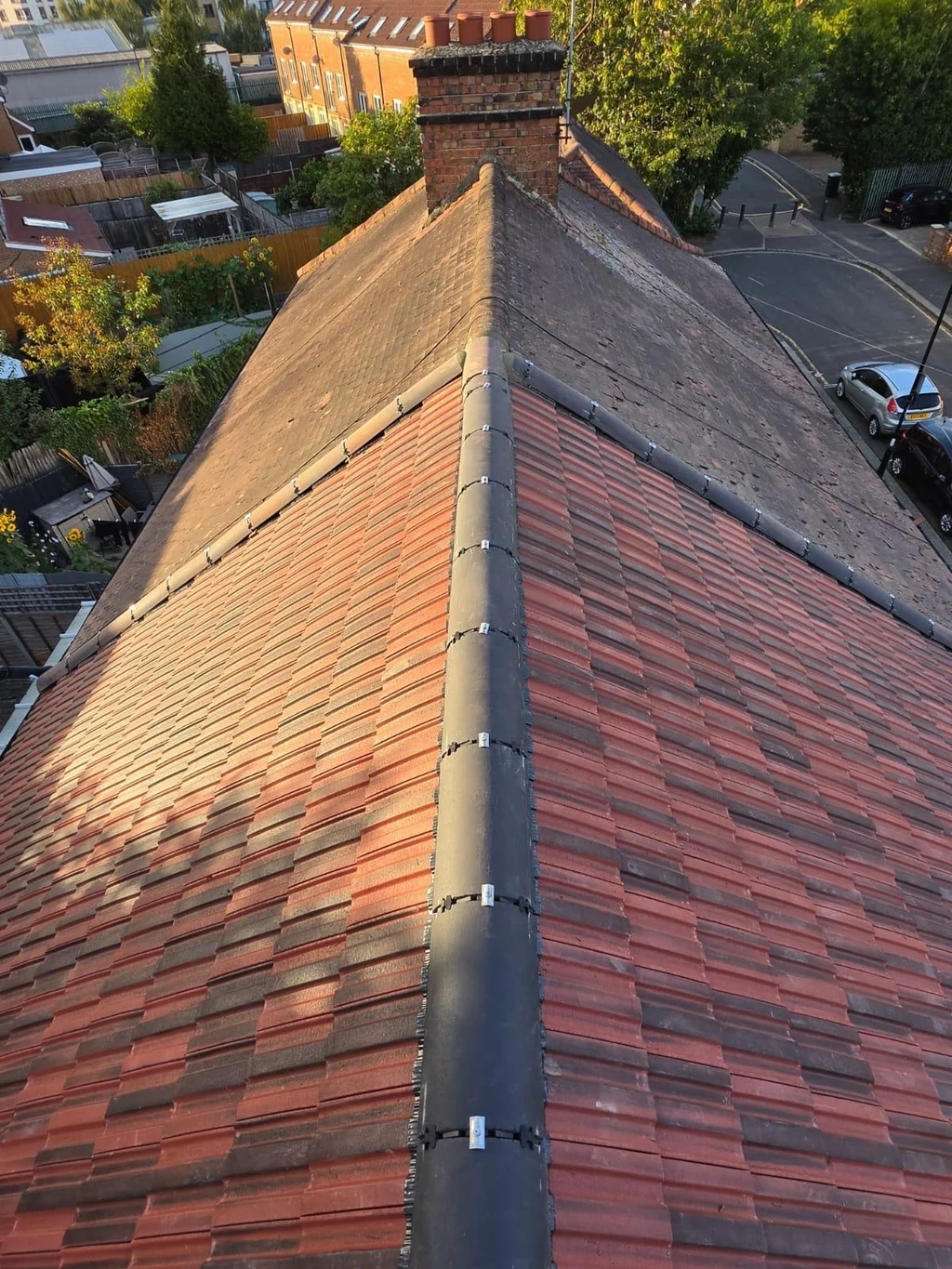
Croydon grew fast between the wars, and streets of 1930s semis spread out through Shirley, Selsdon, Sanderstead, Purley and Coulsdon. Most were built with clay plain tiles, and many were later re-covered in concrete interlocking tiles that are now reaching the end of their own life. Addiscombe's Edwardian villas still carry clay plain tiles with terracotta ridges. Out towards Bromley, the inter-war estates share the same roofs and the same problems. Patrick matches the tile to the house and to its neighbours.
Concrete interlocking or clay plain tiles
The right tile depends on the house and the pitch of its roof.
Concrete interlocking tile
Large tiles that lock together side by side, so fewer are needed per square metre and the roof goes on faster. They are heavy, hard-wearing and good value, and they suit most roof pitches on semis and bungalows.
Best for: 1930s semis and bungalows
Clay plain tile
Small, traditional tiles laid double-lapped, so every point on the roof has two layers over it. They weather to a warm colour and suit Edwardian and period houses. More tiles and more labour mean a higher price.
Best for: Edwardian villas and period homes
Recent tiled roofs jobs
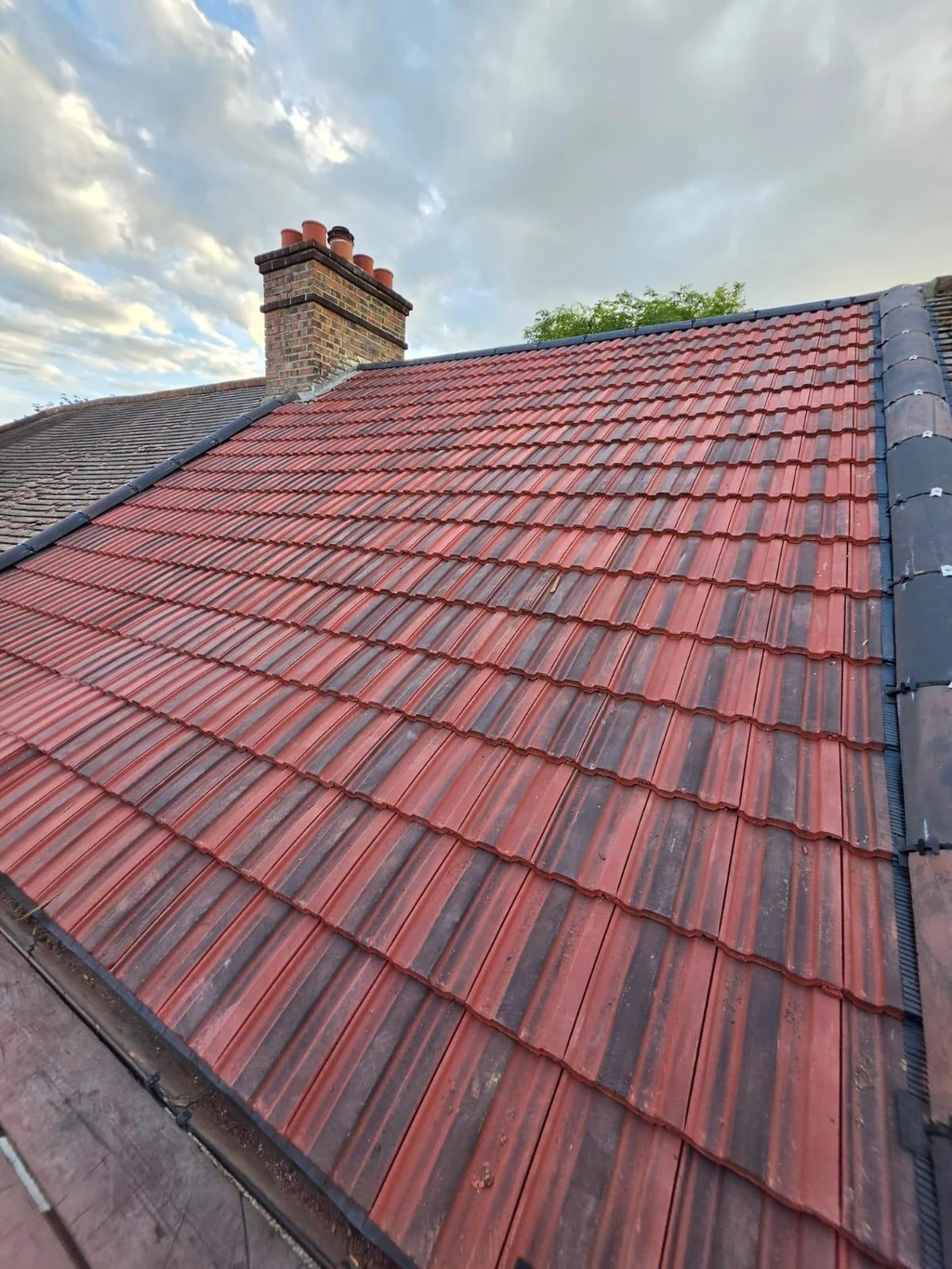
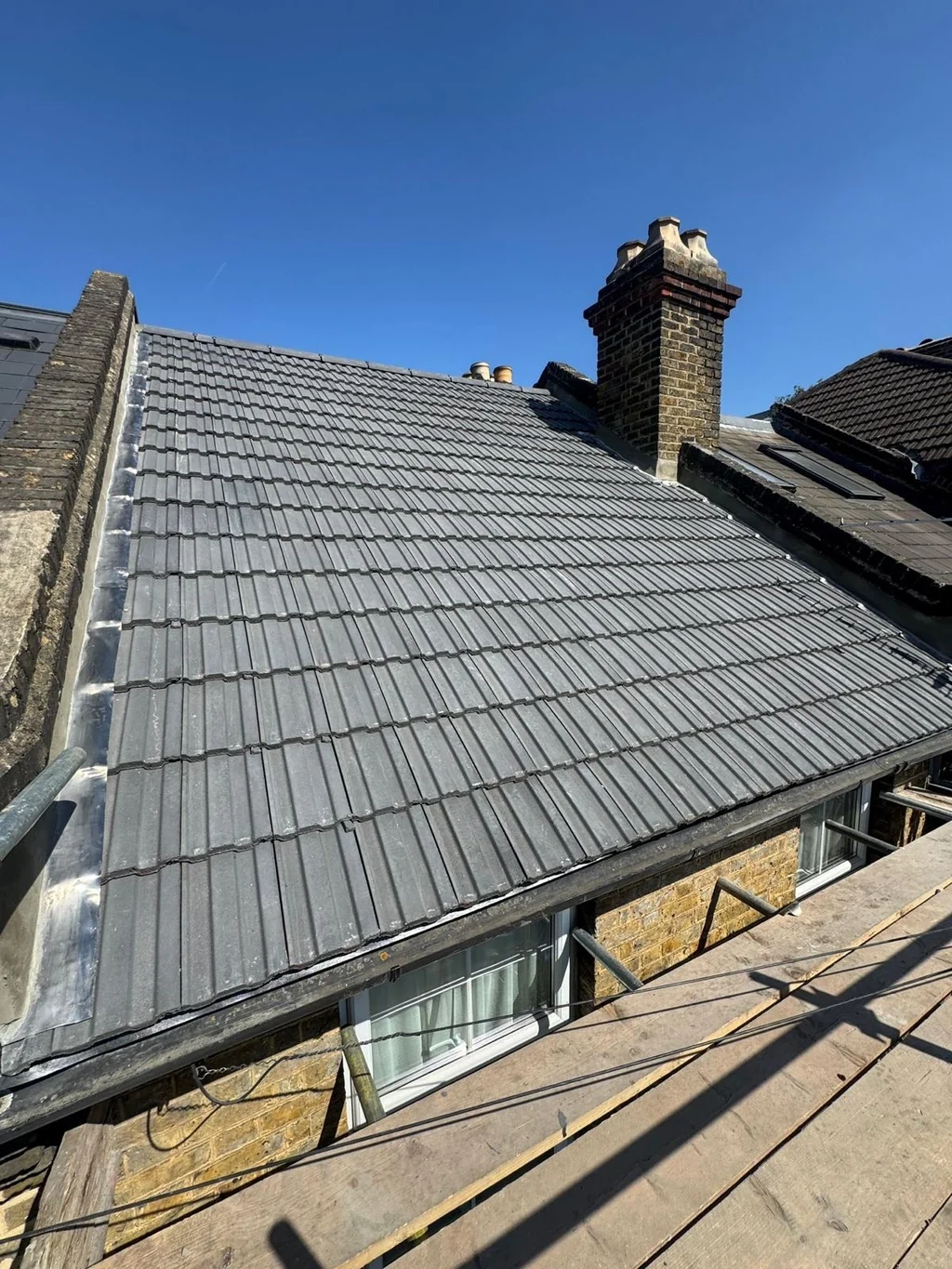
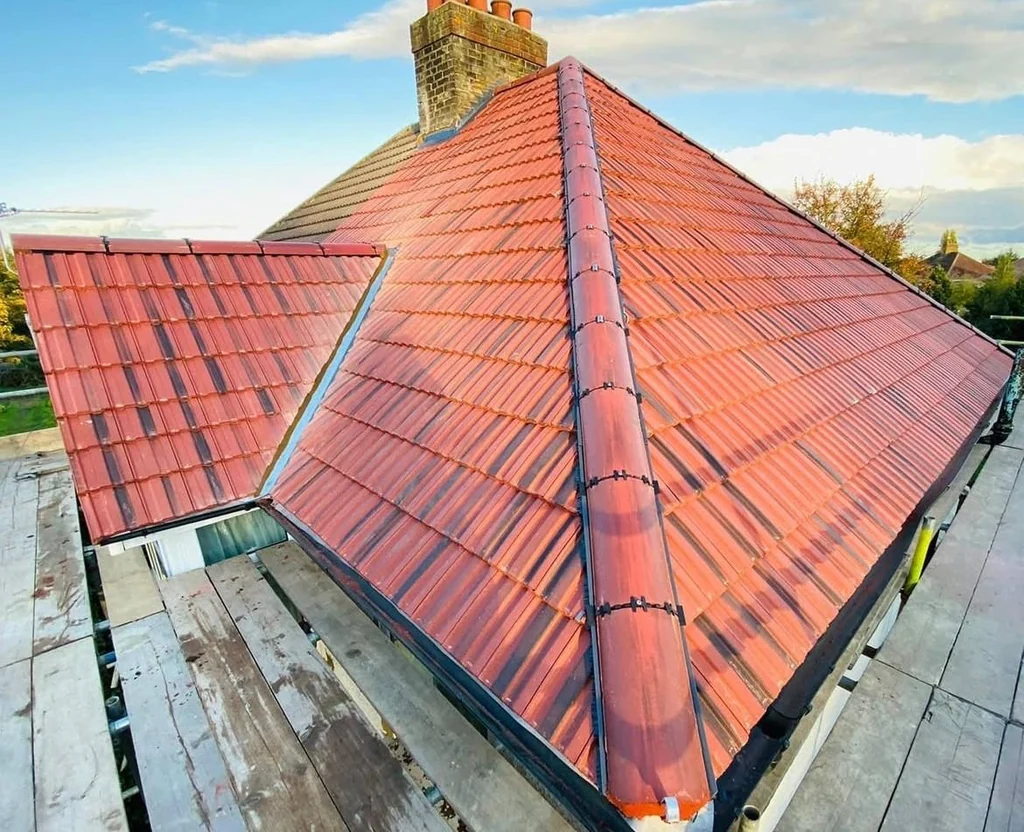
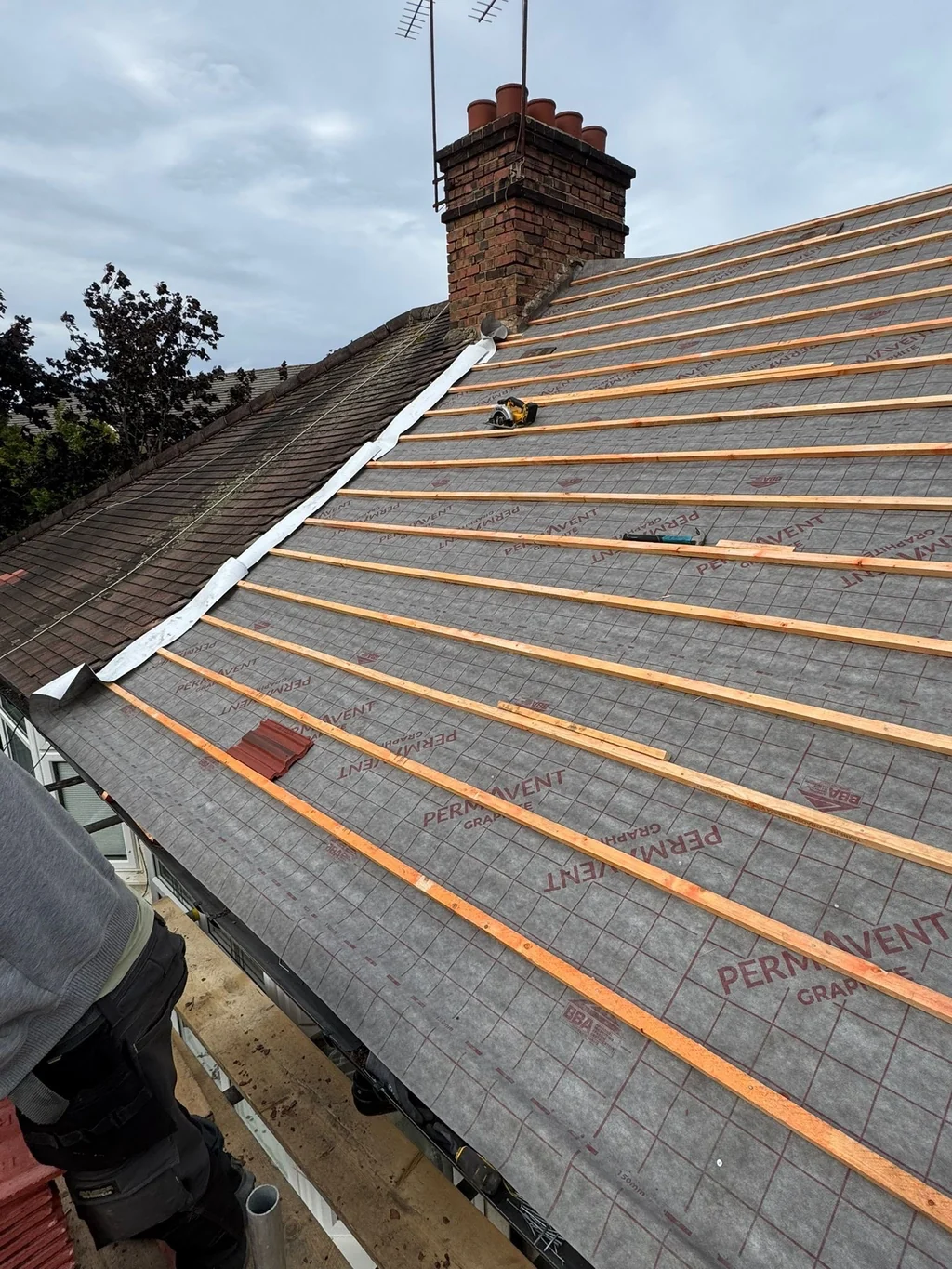
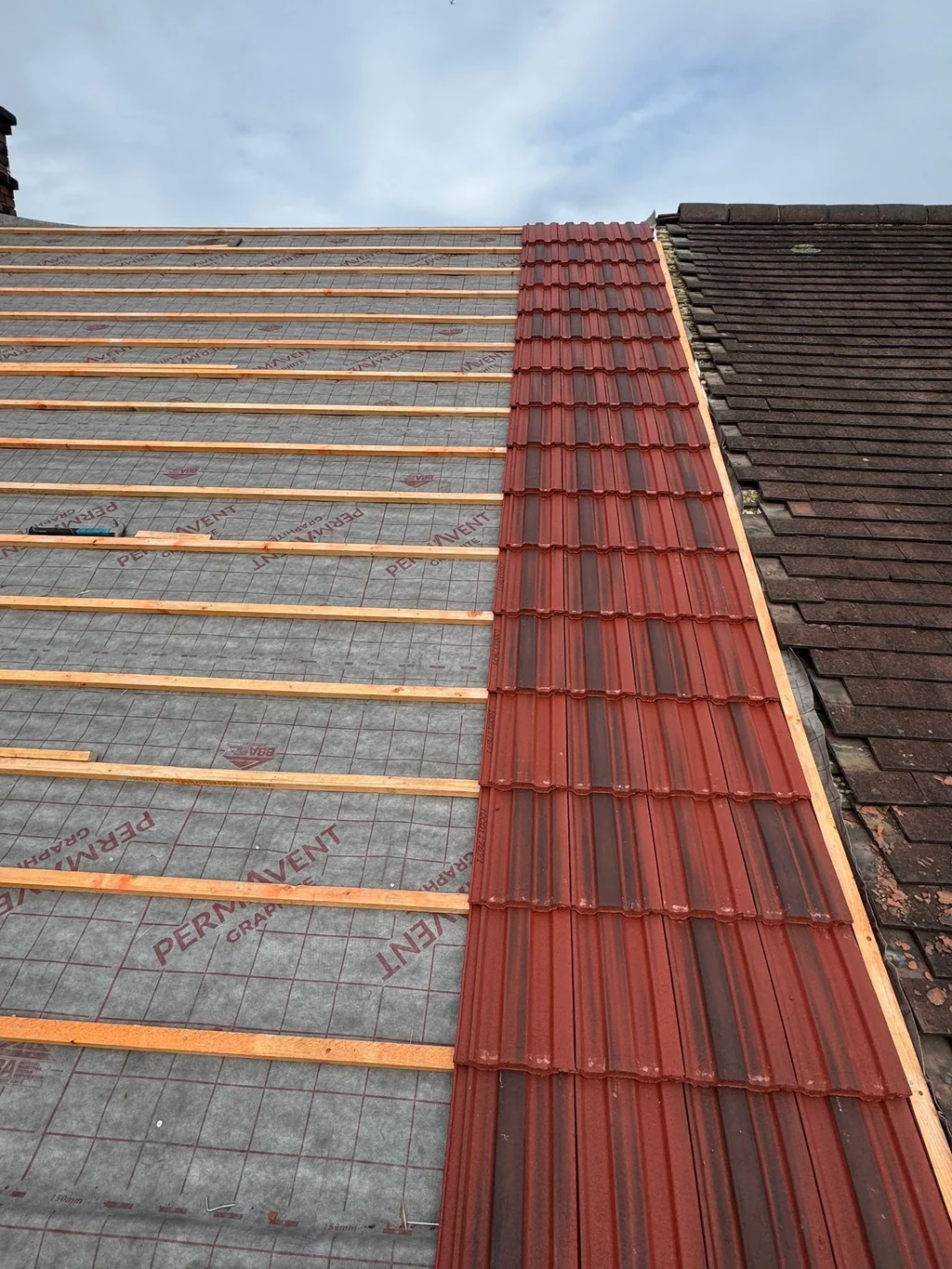
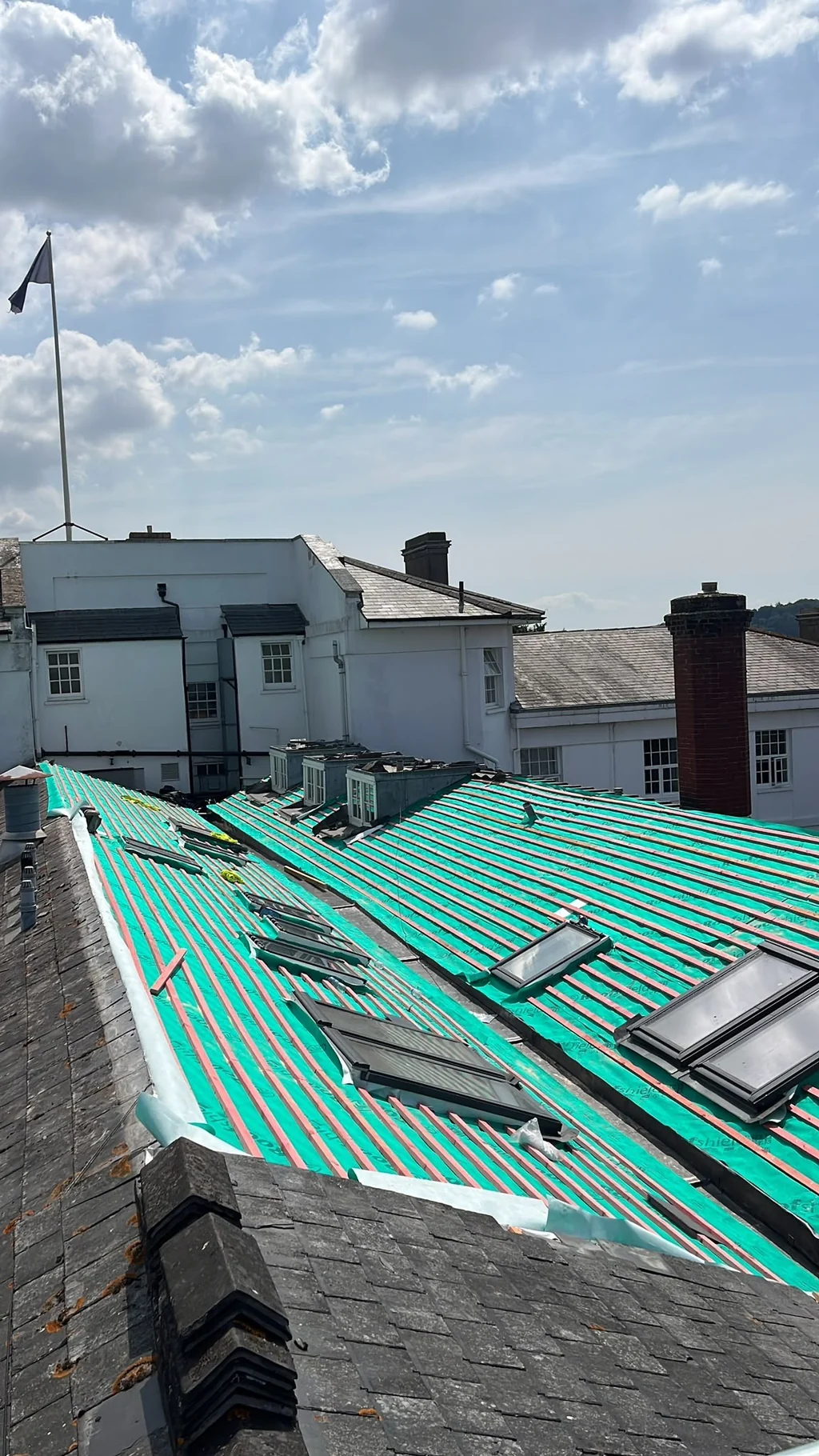
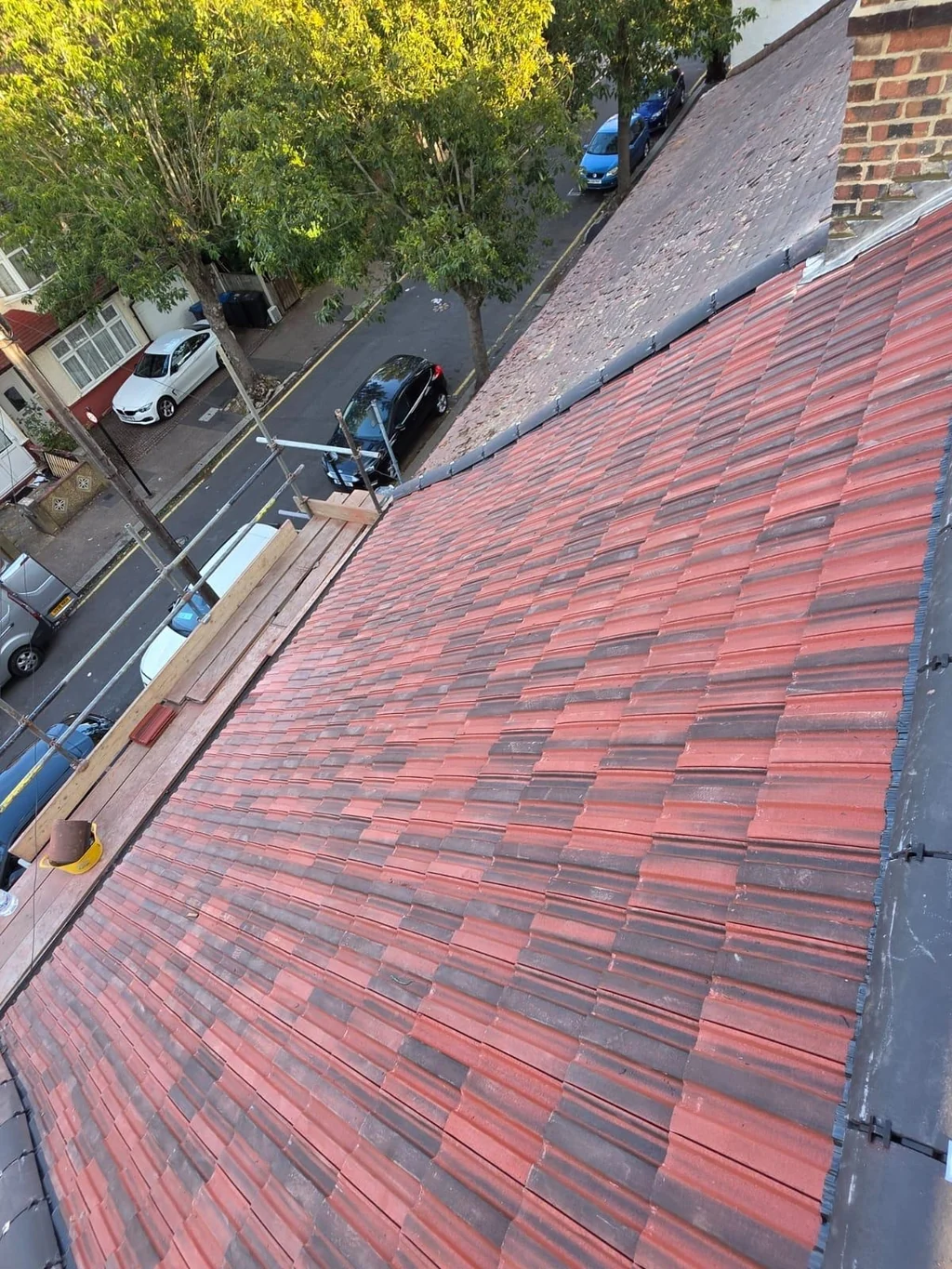
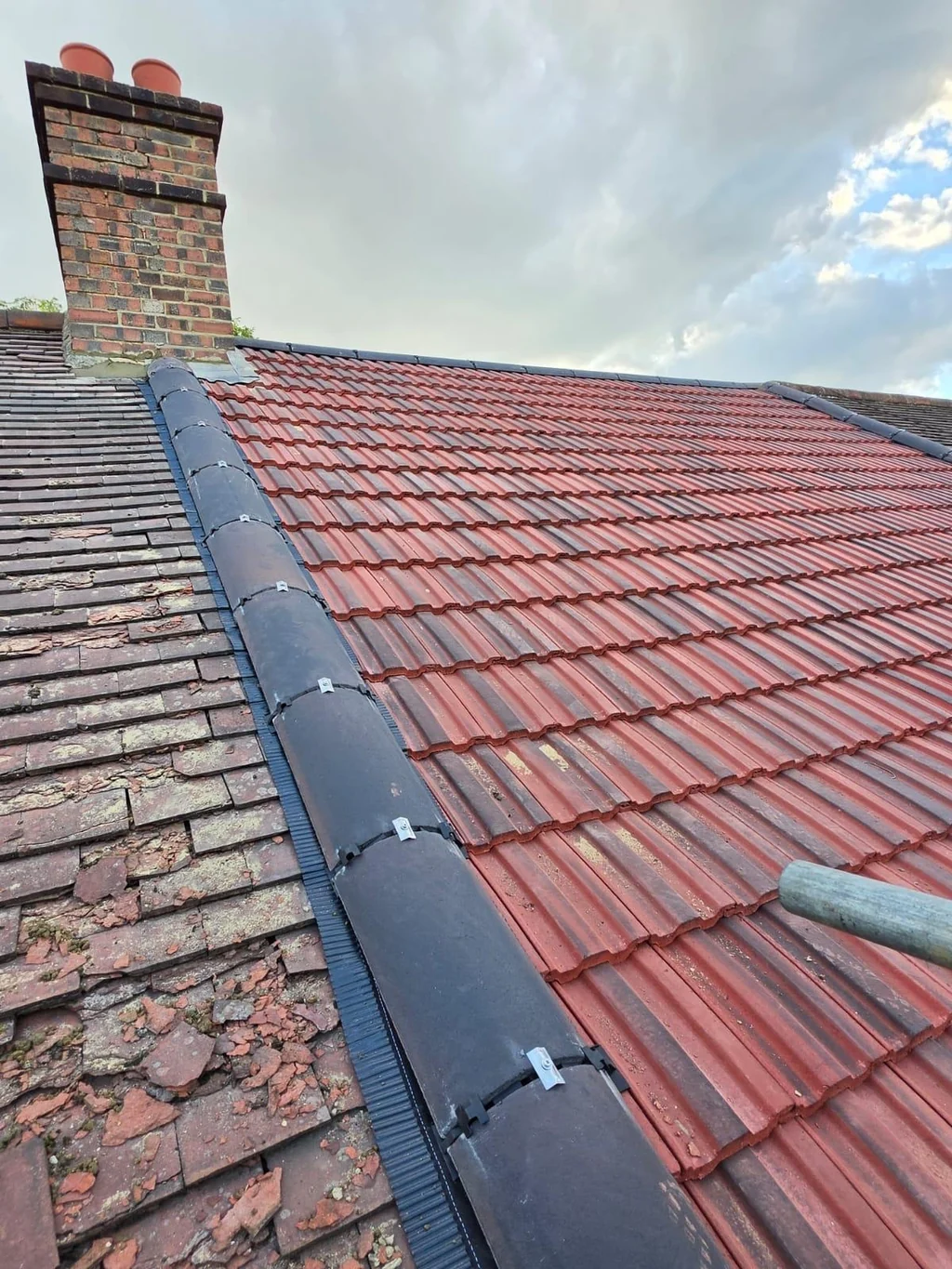
Tiled roof customers on how Apex work
Apex roofing and guttering Ltd came and gave me a free quotation on a new roof once I match several quotes I decided to go ahead with Apex. They kept me updated throughout the process showing photos and explaining what’s happening the process was so easy for me highly recommend to anyone needing work done
Had a leak in my felt rock called patrick he came and showed me photos Stating i needed a new roof i agreed and they sent to work completed in time and Cleaned up Nice really recomend
Recomend to anyone needing roof renewal or repair have a new salte roof done with natural slate and couldnt be happier I picked apex roofing and guttering ltd to do it for me
Ridge tile was blown off called apex roofing and guttering Ltd they came out right away and replaced the tile very satisfied with the job Patrick have done highly recommend
I am leaving review because i am very satisfied with new roof these guys have done very clean and professional team really recommend
Had a leak in my lead flashing around my chimney wanted to get it renewed Patrick came with he's team of men and carried out work involving all new code 4 lead flashing since then never seen a leak very happy with the work
What affects the cost of roof tiling
Tiling prices turn on the tile, the roof and what is underneath. Interlocking tiles cover more roof per tile than clay plain tiles, so they cost less to lay. Hips, valleys and bays mean cutting and extra fixings. If the battens and old felt are rotten, they have to come off too, and scaffold is part of almost every tiling job. After the survey, Patrick agrees a single price with you, and your written quote shows it.
What sets the price
- Interlocking or plain tiles
- Roof area and pitch
- Hips, valleys and bay roofs
- Battens and felt replaced
- Scaffold and access
- Ridge and verge finish
Tiled roofs questions
What is the best roof tile for a 1930s semi?
Concrete interlocking tile suits most 1930s semis because it is tough, quick to lay and good value. If your house still has clay plain tiles and sits on a street where most neighbours kept theirs, clay keeps the look. Patrick weighs up the roof pitch, the house and the street before he recommends either one.
How long do concrete roof tiles last?
Concrete interlocking tiles last around 50 to 60 years before they go porous and start to fail. The battens and felt under them often give out first, which is why a roof can leak while the tiles still look fine from the street. A survey from the loft side shows the real condition of the whole roof.
Can concrete tiles replace slate on a roof?
Yes, but the roof has to be checked first, because concrete interlocking tiles are much heavier than slate. Victorian rafters sized for thin slate can sag under the extra weight, and in a conservation area the change can need consent. Slate-effect tiles give a lighter way to keep the slate look. Patrick checks the rafters from the loft before recommending anything.
Why is moss bad for a tiled roof?
Moss holds water against the tiles, lifts their edges and blocks your gutters. In winter that trapped water freezes, cracks porous tiles and opens gaps for wind-driven rain. Patrick lifts a few tails on the visit and photographs what the moss has done underneath, so you see any frost-cracked tiles for yourself.
What is the difference between clay and concrete roof tiles?
Clay tiles are fired from natural clay and hold their colour, while concrete tiles are made from sand and cement and are heavier and cheaper. Clay suits period houses and lasts longer. Concrete gives more roof for the money on a semi or bungalow. Both perform well on the right roof, fixed to the right standard.
Tiles tired on your Croydon semi?
Ask for a free quote and Patrick will show you in photos if it is the tiles, the battens or both that need replacing.